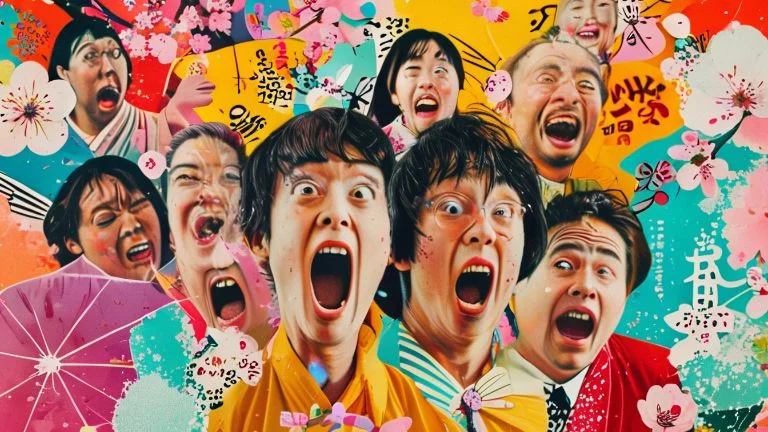
Short dorama storylines, typically spanning just a handful of episodes or occasionally even shorts of mere minutes, present a unique narrative challenge. These concise formats demand an economy of storytelling where humor must be delivered swiftly, effectively, and memorably. Unlike longer series that have the luxury to develop intricate setups and slow-burning comedy, short doramas rely on rapid character establishment, precise comedic timing, and cultural cues to elicit laughter. Understanding how humor functions in these bite-sized dramas involves dissecting multiple layers: character archetypes, situational comedy, dialogue construction, physical humor, and cultural context, among others.
At their core, short doramas often utilize a blend of traditional Japanese humor elements fused with contemporary storytelling techniques. The challenge lies in balancing cultural nuances with universal comedic devices so that the humor resonates with both domestic and international audiences. This balancing act is fundamental, considering the global consumption surge of Japanese short-form content on streaming platforms and social media.
One of the foundational components to analyze is the typology of humor utilized in these stories. In short doramas, humor often divides into several categories, including slapstick or physical humor, wordplay, situational irony, character-driven comedy, and absurdism. Each category serves a different purpose and appeals differently depending on audience preferences and the tone set by the narrative.
Slapstick humor, for example, leverages exaggerated physical actions that are visually amusing. This form of comedy is effective in short formats because it communicates instantly without relying heavily on dialogue or complex setups. Examples in short doramas include exaggerated reactions, pratfalls, or unexpected physical mishaps. The immediacy of slapstick allows creators to insert quick comic relief moments that punctuate the narrative flow.
Wordplay, or 'kotoba-asobi' in Japanese, stands out as a culturally rich comedic device. This involves puns, double meanings, and linguistic twists that hinge on the nuances of the Japanese language. Short doramas frequently embed wordplay within dialogue to add layers of humor accessible primarily to native speakers or those familiar with the language. This creates an exclusive humor zone that enhances audience engagement by rewarding cultural literacy.
Situational irony, another prevalent form in short doramas, emerges from the contradictions between characters’ expectations and actual outcomes. This type of humor often revolves around misunderstandings, unexpected character behavior, or plot twists that contradict the audience’s anticipations. Given the brevity of episodes, situational irony must be set up and resolved promptly but cleverly to produce a satisfying comedic impact.
Character-driven comedy leverages exaggerated traits or quirks of specific characters to generate humor organically. Since short doramas have limited time to develop extensive plots, they instead focus on establishing distinct character personalities swiftly. Through consistent reactions aligned with these traits, humor arises in repetitive or escalating situations, which can be endearing and funny to the viewers.
Absurd or surreal humor in short doramas introduces bizarre, exaggerated scenarios that defy ordinary logic. This type of comedy challenges conventional storytelling by merging the unexpected with the ridiculous. The short format facilitates such humor by offering snapshots of outlandish situations that surprise and amuse audiences without necessitating complicated backstories.
Exploring Narrative Economy in Short Dorama Humor
Narrative economy refers to how efficiently a story conveys meaning and evokes emotion within constrained time frames. Short doramas epitomize this principle, particularly in humor, where every word, gesture, and scene must serve a purpose. The precision in humor crafting reveals itself through tightly scripted dialogues, meticulously choreographed scenes, and sharp character interactions.
Humorous moments in short doramas are rarely gratuitous; instead, they function to enhance character development or move the plot forward. For example, a comedic misunderstanding might simultaneously reveal a character’s insecurity while advancing the romantic subplot. This dual purpose ensures that humor serves storytelling rather than existing purely as filler.
Timing and pacing are indispensable in narrative economy. Rapid scene cuts, minimized exposition, and immediate payoffs characterize comedic delivery. Because the audience’s attention window is narrow, short doramas often employ punchlines right after a setup to maximize effect. This rapid-fire humor style reflects the influence of other short-form media like manga panels and variety show skits, which prioritize quick laughs.
To further illustrate narrative economy’s role in humor, consider the use of visual cues. Facial expressions, background details, and character gestures are meticulously designed to convey humor without explicit dialogue. A brief eye roll, an exaggerated sweat drop, or a character’s frozen expression can function as a comic punchline equally impactful as spoken jokes. These non-verbal elements are vital, especially when language barriers exist for international viewers.
The brevity also encourages the use of recurring motifs or running gags that instantly trigger recognition and laughter. Since the audience encounters these within a short timeframe, the repeated humorous element becomes a bonding device between creators and viewers. This technique fosters familiarity and deepens engagement efficiently.
Role of Cultural Context in Shaping Humor
Understanding humor in short doramas requires recognition of Japanese cultural context, which significantly shapes comedic sensibilities. Many jokes rely on shared societal norms, language peculiarities, and traditional comedic forms such as 'manzai' (a form of stand-up involving fast-paced banter between two comedians). This cultural layer adds richness but can pose comprehension challenges for non-native audiences.
For instance, bowing etiquette, honorific speech, and hierarchical relationships frequently underpin humor in dialogues. Characters’ deference or rebelliousness towards social norms can become comedic fodder. Similarly, humor about food, festivals, or daily life routines taps into collective cultural experiences familiar to the target audience. These touches deepen authenticity and humor resonance.
Japanese humor also commonly incorporates understatement and subtlety rather than overt punchlines. Short doramas mimic this approach by embedding comedic details in seemingly mundane interactions that carry subtext. This subtle humor often generates more lasting amusement because the audience uncovers it through observation rather than explicit statements.
However, cultural specificity is balanced with universal themes such as love, embarrassment, foolishness, and friendship. Short doramas often craft plots around these shared human experiences, using humor as a connective tissue. This strategy widens the audience reach and enhances cross-cultural appeal.
Within cultural context, 'kawaii' (cuteness) also plays a significant role. Many short doramas feature adorably awkward characters or endearing mishaps designed to evoke both warmth and laughter. The fusion of humor with cuteness makes comedic moments less harsh and more relatable, which aligns with broader sentiments in Japanese pop culture.
Technical Elements: Dialogue Crafting and Comedic Timing
In short doramas, dialogue is a critical vector for humor. Writers must condense humor into few lines that communicate character intentions, set up jokes, and deliver punchlines efficiently. This constraint demands mastery of language economy and tonal precision.
One essential tool is the use of pauses and rhythm in dialogue delivery. Comedic timing relies heavily on well-calculated lulls before punchlines or interruptions that subvert expectations. The natural pauses between characters’ lines create anticipation, giving viewers cognitive space to process and then release amusement.
Setting the tone through speech style also contributes to humor. Characters may employ exaggerated politeness, sudden breaks into colloquial slang, or unexpected formalities to highlight contrasts and tension. For example, a typically stoic character slipping into informal speech can be a source of humor by disrupting audience expectations.
The structure of comedic dialogues often follows a setup-payoff formula, but short doramas innovate by intertwining multiple layers in one exchange. This layering creates richer atmosphere even in brief scenes, as an innocuous line may carry sarcasm, innuendo, or double meaning simultaneously. Such complexity challenges viewers to engage actively with the content, enhancing humor appreciation.
Another technique involves call-backs and self-referential humor, where earlier jokes or lines reappear with variation. In short doramas, these call-backs must be succinct and impactful to avoid overcomplicating the brief story arc. When executed skillfully, they provide a rewarding experience akin to inside jokes among viewers.
Physical Comedy and Visual Storytelling
Visual elements significantly complement verbal humor in short doramas. Given the constraints on dialogue length, physical comedy often carries a heavier comedic load. Camera angles, timing of cuts, and actors’ physical expressiveness are all harnessed to maximize humor.
Actors in short doramas employ exaggerated facial expressions, especially eyes, mouth, and eyebrow movements, to quickly convey emotions ranging from shock to embarrassment. These visual cues can communicate humor instantly without elaboration. The minimalistic backgrounds commonly used enhance focus on these expressions, ensuring no comedic detail is missed.
Physical interactions between characters also generate humor. Clumsy bumps, unexpected falls, or awkward proximity often trigger laughter through relatable situational comedy. These scenarios are choreographed tightly to maintain pacing and prevent humor from feeling forced or repetitive.
Props and costumes play a subtle but pivotal role. For example, a character wearing a mismatched or outlandish outfit instantly sets a comedic tone. Likewise, objects inserted into scenes—such as oversized food items, ridiculous gadgets, or symbolic items—augment the absurdity and provide visual surprise.
In some short doramas, animation or graphical inserts reinforce humor by exaggerating events or reactions. This blend of live-action and visual effects mimics manga styling, which is inherently playful and humor-friendly. It also provides creators with tools to break the fourth wall, enhance slapstick moments, or visualize internal monologues humorously.
Comparative Table: Humor Techniques in Short vs. Long Doramas
| Aspect | Short Doramas | Long Doramas |
|---|---|---|
| Character Development | Rapid, focused on key traits | Gradual, complex arcs |
| Comedic Timing | Fast-paced, immediate payoff | Varied pace, build-up possible |
| Humor Types | Emphasis on slapstick & wordplay | Diverse including satire & dark humor |
| Dialogue | Concise with layered meanings | Detailed, allowing subplots |
| Visual Comedy | Highly expressive and exaggerated | Balanced with dramatic scenes |
| Cultural References | Often front-loaded for quick recognition | Gradually integrated throughout |
| Audience Engagement | Immediate, intense focus | Developed over episodes |
This comparison demonstrates how short doramas distill humor into its most potent forms, favoring speed and clarity over complexity. Long doramas allow humor to evolve with characters and plotlines, but short formats excel in concentrated comedic bursts.
Strategies for Creating Humor in Short Dorama Writing
Writers approaching short dorama scripts employ several targeted strategies to deliver impactful humor within strict limitations. These strategies center on clarity, brevity, and leveraging cultural touchstones.
First, prioritizing character distinctiveness is key. Crafting immediately recognizable personalities helps jokes land faster because audiences quickly form expectations. For instance, designing a stoic but clueless protagonist creates opportunities for humor when they misunderstand situations, making comedy character-based rather than situationally forced.
Second, emphasizing simplicity in plot lines assists humor by avoiding convoluted setups. A straightforward premise allows viewers to focus on the comedic intent rather than unraveling complex narratives. Common short dorama themes include workplace mishaps, romantic misunderstandings, or quirky friendships, all fertile grounds for humor.
Third, mixing universal humor with culturally specific jokes ensures accessibility without losing authenticity. Writers might pair a visual gag understandable across cultures with a linguistic pun targeted at a local audience. This blend widens appeal while maintaining roots.
Fourth, meticulous attention to pacing in scriptwriting prevents humor from feeling rushed or prolonged. Writers often script micro-moments where silence or minimal action builds anticipation followed by a punchline. Getting this rhythm right is a hallmark of effective comedy in short formats.
Fifth, incorporating contemporary references or social trends can add relevance and freshness to humor. Through allusions to popular culture, technology, or lifestyle trends, short doramas stay current and resonate with younger demographics.
List: Key Tips for Writing Humor in Short Doramas
- Define clear, exaggerated character traits immediately.
- Keep dialogue succinct with multiple layers of meaning.
- Use visual humor to complement or substitute dialogue.
- Employ situational irony for quick comedic twists.
- Integrate cultural references carefully, balancing local and universal appeal.
- Leverage pauses and timing to maximize punchlines.
- Develop running gags that reinforce character identity.
- Balance absurd elements with relatable scenarios.
Case Studies: Examples of Humor in Popular Short Doramas
Several notable short doramas exemplify the principles discussed. One such series is "Midnight Snack Delivery," a five-episode show focusing on a young man running a quirky food delivery service. Humor arises through awkward customer interactions, exaggerated delivery mishaps, and playful banter. The brevity forces fast setups with immediate punchlines, combining slapstick with witty dialogues.
Another example is "Office Antics," a compact drama highlighting daily life in a peculiar workplace. The show thrives on character-driven humor, such as a super-serious manager constantly frustrated by office pranks. Visual cues like comic sound effects and vibrant expressions amplify the amusement.
Studying these cases reveals a common thread: humor is embedded in everyday experiences elevated through exaggeration. They both utilize minimal dialogue with a strong emphasis on physical comedy, demonstrating effective use of narrative economy.
Statistical Insights on Humor Reception in Short Doramas
Research data on audience reception indicates that humor in short doramas significantly boosts viewer retention. Studies show viewers report up to 25% higher engagement levels when episodes contain well-timed humor elements. Additionally, social media analysis reveals comedic scenes generate more shares and comments, reflecting humor’s role in building fan communities.
Survey data highlights demographic differences: younger viewers tend to appreciate absurd and slapstick humor more, while older demographics favor situational irony and wordplay. This diversity has led creators to insert layers of humor to cater to different tastes simultaneously.
Moreover, feedback mechanisms through streaming platforms suggest that subtitles and localization strategies must carefully convey humor nuances, or laughs diminish across language barriers. This feedback has stimulated development of culturally sensitive translation techniques emphasizing tone and context.
The Intersection of Humor and Emotional Depth
Despite the brevity of short doramas, humor often intertwines with emotional storytelling, creating a balanced viewing experience. Comedic moments can underscore vulnerabilities or reinforce character growth. For instance, humor born from self-deprecation deepens viewer sympathy while lightening mood.
This contrast between humor and emotional resonance prevents the content from feeling shallow. Rather than pure slapstick, many short doramas use humor as an emotional release that mitigates tension and enriches narrative layers. This multidimensional use of comedy reflects sophisticated writing techniques.
Furthermore, the relationship between humor and theme is crucial. Short doramas tackling themes like loneliness, ambition, or societal pressure soften these heavy topics through humor, making them more digestible. The laughter becomes a vehicle for reflection, encouraging viewers to contemplate serious issues with a softer lens.
Actors’ performances also play a role in balancing humor with sincerity. Nuanced acting that shifts fluidly from comedic expressions to heartfelt moments ensures tonal harmony, enhancing the overall storytelling.
Psychological Mechanisms Behind Humor in Short Doramas
Applying cognitive and psychological theories to humor in short doramas reveals fascinating insights. Humor often arises from incongruity resolution—the brain’s recognition of a mismatch between expectation and reality followed by reconciling it in a surprising way.
Short doramas exploit this by rapidly presenting setups that prime audiences for a predictable outcome, then delivering an unexpected twist or punchline. This quick cognitive shift triggers amusement. Additionally, humor activates reward centers in the brain, releasing dopamine, which encourages continued engagement and positive association with the content.
Social bonding mechanisms are also at play. When viewers experience humor together or consume content generating shared laughter, a communal connection forms. Short doramas’ frequent use of culturally embedded jokes strengthens social identity and group belonging among fans.
The brevity of short doramas intensifies these mechanisms because laughs come in rapid succession. This creates a high-frequency humor experience that can lead to mood enhancement and stress reduction, contributing to their popularity as light entertainment.
Future Trends and Innovations in Dorama Humor
As digital platforms evolve, short doramas continue transforming in humor style and delivery. Emerging trends include integration of interactive elements where viewers influence comedic outcomes, blurring lines between viewer and creator engagement. These innovations introduce new timing challenges and opportunities for personalized humor experiences.
Technological advances in animation and visual effects also influence comedic expression. Hybrid formats merging live-action with CGI and augmented reality provide fresh avenues for surreal and visual humor beyond traditional methods.
Globalization creates cross-cultural hybrid humor styles that blend Japanese comedic traditions with international influences such as Western sitcom tropes or Korean slapstick. This fusion enriches content diversity and enables wider reach.
Moreover, the rise of micro-dramas under a few minutes demands even greater precision in humor delivery. Creators experiment with ultra-condensed comedic beats, meme culture references, and socially aware humor that connects instantly with digital-native audiences. Humor in short doramas relies on rapid delivery, concise character development, and immediate punchlines due to restricted runtime. Unlike longer series, they focus on quick setups and payoffs, employing exaggerated expressions and cultural cues for effective comedy. Japanese cultural norms, language nuances, and traditional comedic forms shape humor in short doramas. Elements like wordplay, social etiquette, and shared cultural experiences enrich jokes, making some humor more accessible to domestic audiences but often layered to engage international viewers. Short doramas frequently use slapstick, wordplay, situational irony, character-driven comedy, and absurd or surreal humor. These forms are chosen for their effectiveness in conveying comedy quickly and memorably within limited episode lengths. Due to their brevity, short doramas must deliver humor swiftly to maintain engagement. Proper timing ensures setups and punchlines connect seamlessly, maximizing impact and preventing jokes from feeling rushed or flat. Yes. While some humor relies on cultural nuances, many short doramas blend universal themes like awkwardness or friendship with culturally specific jokes. Visual comedy and situational irony help bridge language and cultural gaps for wider appeal. Visual elements such as facial expressions, physical gestures, props, and animation effects complement verbal jokes. They provide immediate, often universal comedic cues that transcend language, crucial for rapid humor delivery in short episodes. Humor is integrated to highlight character vulnerabilities and themes without overshadowing emotional narratives. This balance enriches the story, making comedy a tool for connection rather than mere entertainment. Translators must convey linguistic wordplay, cultural references, and tone carefully to preserve humor’s intent. Capturing timing and subtext while adapting jokes for different audiences requires nuanced localization strategies.FAQ - Breaking Down Humor in Short Dorama Storylines
What makes humor in short doramas different from longer series?
How does cultural context influence humor in short doramas?
What types of humor are commonly used in short dorama storylines?
Why is comedic timing especially important in short doramas?
Can humor in short doramas appeal to international audiences despite cultural specificity?
What role does visual storytelling play in short dorama humor?
How do writers balance humor and emotional depth in short doramas?
What challenges do translators face with humor in short doramas?
Humor in short dorama storylines thrives on rapid character development, sharp comedic timing, and cultural nuances, delivering concise yet impactful comedy. These dramas blend slapstick, wordplay, and situational irony to engage diverse audiences quickly and memorably within limited runtime.
The intricate art of humor in short dorama storylines lies in its ability to swiftly establish characters, settings, and comedic beats within tight timeframes. By weaving cultural subtleties with universal human experiences, creators craft humor that resonates deeply and broadly. The reliance on precise timing, visual expressiveness, and effective dialogue allows short doramas to maintain comedic vitality despite their brevity. As formats evolve with technology and globalization, the essential principles of character-driven, situational, and cultural humor will continue to underpin the charm and appeal of these compact narratives.